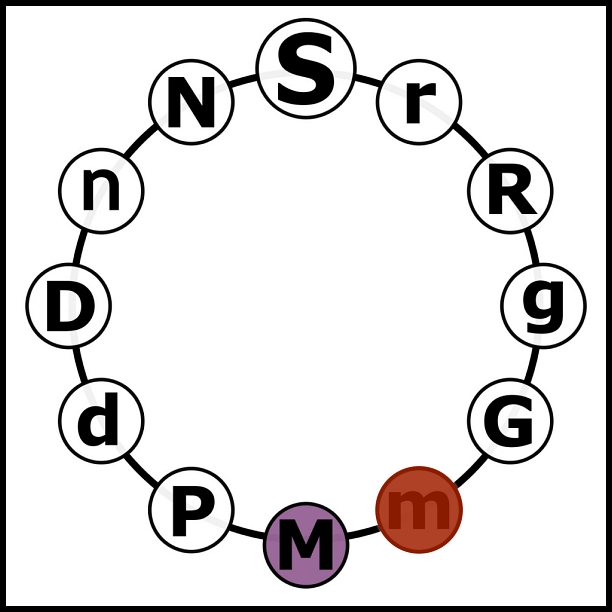

S-r-g-M-P-d-N-S Pivotal to Hindustani history, Todi overflows with musical ideas found nowhere else on the planet. Some link its ambiguous geometries with ‘existential anguish and unsettlement’, while others hear ‘the playfulness of a newborn, content and smiling’. Rajan Parrikar hails it as “the most profound, finespun idea in melodic music…from ecstasy, to frolic, to pathos, […]

• Raag Todi •

• Raag Yaman •
S-R-G-M-P-D-N-S Among the first-learned and most-performed ragas, Yaman’s influence on modern Hindustani music is impossible to overstate. Linked to the early night hours (‘when lanterns are lit’), the disbalancing effects of tivra Ma – the only non-shuddha swara on offer – allow for a kaleidoscopic emotional range, with Sa and Pa often being skipped in […]

• Raag Shree •
S-r-G-M-P-d-N-S According to Gwalior vocalist Omkarnath Thakur, Shree’s seven swaras are associated with those sunset hours when “disembodied spirits…become active, and aid in the black magic of Tantriks”. Tied to mythologies of Lord Shiva, the raga takes its name from ‘sri’, a sacred Sanskrit syllable which, in Vedic tradition, represents the material nature of humanity’s place […]

• Raag Puriya Dhanashree •
S-r-G-M-P-d-N-S Like the scale-congruent Shree, Puriya Dhanashree’s versatile hemitonic clusters outline a major triad (SGP) with Sa and Pa ‘enclosed’ by their neighbours to present two sets of three adjacent swaras (NSr, MPd). Pa, while often omitted in aroha, exerts its gravity on descending melodies, easing the tension of the tivra Ma by providing temporary […]

• Raag Puriya •
S-r-G-M-D-N-S A prominent sunset raga, Puriya takes the same six swaras as Marwa and Sohini, reworking them to present a distinct set of melodic forces. Renditions tend to focus on mandra and madhya saptak, seeking a relatively even balance between ascending and descending phrases – with its character often considered more ‘melodic’ than Marwa (which is […]

• Raag Marwa •
S-r-G-M-D-N-S Notable for omitting its own Sa for long stretches, the hexatonic Marwa conjures moods of ‘austere, spiritual renunciation’ – summoning these sentiments with low, slow lines which patiently outline the raga’s highly irregular geometry (three adjacent plus three wide-set swaras: NSr; GMD). Its descent-dominant melodies, which avoid Pa throughout, often tease at resolutions which […]

• Raag Basant •
S-r-G-M-P-d-N-S Basant (meaning ‘Springtime’) is a historic and highly influential form, with a lineage stretching back to at least the 8th century. The raga’s modern incarnation matches the swaras of Poorvi thaat, with shades of shuddha ma also permitted in some interpretations (e.g. SmmG; mdrS). Phraseological allies include Puriya (GMdNM; mdGmG) and Shree (e.g. NrS; […]

• Raag Gujiri Todi •
S-r-g-M-d-N-S A popular Todi variant named for its historic associations with Gujarat, India’s Westernmost state. Linked to the morning hours, it distinguishes itself from the main Todi by omitting Pa throughout. Tanarang cites a mood of “sweetness and karuna“, revolving around a deergha komal re – with komal dha also playing a particularly prominent role, separated […]

• Raag Madhuvanti •
S-R-g-M-P-D-N-S A shringara raga of relatively recent origin, Madhuvanti is geared towards evoking a ‘sweet’ flavour (‘Madhu’ means ‘Honey’). Rajan Parrikar cites “shared credits for its development…Vilayat Khan is said to have conceived it [in the] 1940s…and around the same time, Vamanrao Padhye of Kolhapur composed a similar raga and called it ‘Ambika’, after the […]

• Raag Vachaspati •
S-R-G-M-P-D-n-S Vachaspati (‘Lord of Speech’) is a recent import from the South, adapted from Carnatic music’s 64th mela scale around the mid-20th century by artists including Ravi Shankar and Ali Akbar Khan. Consequently, its Northern form is still in a state of flux, with few firm melodic conventions aside from staying within the scale’s bounds – […]

• Raag Multani •
S-r-g-M-P-d-N-S Multani is an afternoon raga of angular shape and ancient heritage, which, while matching the seven swaras of Todi thaat, is a Dhanashree family raga with corresponding phrase patterns – re and dha are omitted in ascent and generally rendered durbal throughout. Bhatkhande is said to have considered it the ‘daytime’ counterpart of Basant […]

• Raag Shuddha Kalyan •
S-R-G-M-P-D-N-S A popular early night raga, Shuddha Kalyan ascends with the same 5 swaras as Bhupali (SRGPDS), and descends with the full 7 of Yaman (SNDPMGRS), leading some to title it ‘Bhoop-Kalyan’. Phrases tend to end on the poorvang-slanted Sa, Re, Ga, or Pa, and both the ‘avroh-only’ swaras (Ni & Ma) must be treated subtly throughout […]

• Raag Maru •
S-R-G-M-D-N-S Rare to the point of near-extinction in its own right, the historic Maru is now best known as an ingredient of the highly popular Maru Bihag. In the words of scholar-singer Arun Dravid: “It is not well known, even in the music world, that Maru Bihag is a mixed raga…very few people know that […]

• Raag Puriya Kalyan •
S-r-G-M-P-D-N-S Effectively combining the poorvang of Puriya Dhanashree with the uttarang of Yaman (SrGM+PDNS), Puriya Kalyan covers the seven swaras of Marwa thaat. Pa is prominent in descent, but may be skipped in Kalyanic ascending passages such as MDNS – and Sa is often omitted in both upward and downward motions, with mandra saptak Ni […]

• Raag Hindol •
S-G-M-D-N-S A captivating, challenging audav raga with all swaras appearing in their highest specific positions (i.e. no komals, and Ma, if present, is tivra: also see Bhupali, Hansadhwani, & Adbhut Kalyan). The name translates as ‘swinging’: indicative of the raga’s melodic character, which is built around ‘swaying’ motions between a SGD trio of nyas, with […]

• Raag Firozkhani Todi •
S-r-g-M-d-S A fascinating audav raga formed by removing the Ni from Gujiri Todi – leaving an angular pentatonic shape which, aside from Sa, contains no shuddha swaras (n.b. the same scale is known as ‘Audav Todi’ and ‘Chaya Todi’ too: although the latter title is also separately applied to other fusions of Chaya and Todi). […]

• Raag Saraswati •
S-R-M-P-D-n-S Derived as a ‘janya’ offshoot of the Carnatic Vachaspati (mela #64), Saraswati is named after the four-armed Hindu goddess of music, art, and learning – also venerated in Thailand as ‘Surasawadee’, Myanmar as ‘Thurathadi’, China as ‘Biancaitian’, and Tibet as ‘Yang-Chen-Ma’ (the word derives from ‘saras+wati’: ‘she who possesses flowing water’, associated with Harappan-era worship of […]

• Raag Madhukauns •
S-g-M-P-n-S A curious ‘Dhani tivra Ma’ scale introduced by vocalist Amir Khan via a ‘ma-murchana’ of Chandrakauns (listen to his sargam-demo of the process below) – full of inescapable tension, with 3 of the 5 swaras being imperfect, and the disbalancing Ma–ni sangati on stark display. Sometimes considered identical to Khan’s Chandramadhu, created as part […]

• Raag Amirkhani Kauns •
S-G-M-P-n-S A ‘pentatonic Vachaspati’ created (as the name implies) by Indore vocal master Amir Khan, which omits Re and Dha (thus, Amirkhani Kauns is to Vachaspati as Dhani is to Kafi). All swaras except Sa are imperfect – with the unusual Ma–ni sangati exerting inevitable gravity and drawing melodies away from clear resolution. Few of […]

• Raag Din ki Puriya •
S-r-G-M-d-N-S Din ki Puriya (‘Daytime Puriya’) sets its six swaras to the general phrase patterns of the Puriya–ang, avoiding Pa throughout. The scale’s ‘palindromic hexagon’ places a tight hemitonic cluster (NSr) opposite a wider tone-trio (GMd), also providing an augmented ‘equilateral triangle’ (SGd). Melodic motions remain fairly free, given the lack of any prakriti ragas […]

• Raag Jaitashree •
S-r-G-M-P-d-N-S A sunset raga prominent in the Jaipur-Atrauli gharana, blending Shree with Jait’s komal re incarnation. Some, such as Ulhas Kashalkar, render the aroha ‘triswari’, limiting it to the three swaras of Malashree (SGP), set in Jait Kalyan-style phrases such as SG, GP, PSP – although the avroh is more clustered, often skipping taar Sa […]

• Raag Amritvarshini •
S-G-M-P-N-S A rare audav raga corresponding to the swaras of ‘Yaman no Re/Dha’, imported from a well-established Carnatic form. The name translates as ‘one who showers the elixir of immortality’, hinting at its rich mythological history – in South India, the raga has long been associated with the monsoon (compare to the Northern Malhar ragas, […]

• Raag Shree Kalyan •
S-r-G-M-P-D-N-S Congruent with the seven swaras of Puriya Kalyan (and Marwa thaat), Shree Kalyan is an enchanting product of Kumar Gandharva’s prolific imagination (also see Madhusurja, Lagan Gandhar, Saheli Todi, Rati Bhairav, Bihad Bhairav, and Bhavmat Bhairav). The movements of his main rendition (Dekho Re Rut Phoolan Lagi) place Shree’s tritonal re–Pa sangati on stark […]

• Raag Annapurna •
S-r-g-M-P-d-N-S From my 2018 Darbar interview with bansuri maestro Rupak Kulkarni: “I lately composed Raag Annapurna: dedicated to Maa Annapurna Devi, my grand-guru [teacher of my teacher]. It is a combination of morning and evening ragas, so can be played at either of these times”. In 2022 I asked Kulkarni for more info: he described […]

• Raag Hemavati •
S-R-g-M-P-D-n-S Adopted from Carnatic mela #58, Hemavati matches the swaras of ‘Kafi tivra Ma‘, ‘Madhuvanti komal ni’, or ‘Vachaspati komal ga’. Prominently associated with Hariprasad Chaurasia, although it is unclear who may have first borrowed the scale from the South: Abdul Halim Jaffer Khan also recorded it, as has Amjad Ali Khan, with broad melodic variance […]

• Raag Latangi •
S-R-G-M-P-d-N-S A unique sampurna scale borrowed from the 63rd Carnatic mela, which takes the form of ‘Kalyan komal dha’ (or ‘Yaman’s poorvang + Bhairav’s uttarang’: SRGM+PdNS). Subbha Rao’s Raga Nidhi Vol.3, written in the early 1960s, mentions that “Latangi is not found in Hindustani music” (p.90) – and it remains unclear who first imported the […]

• Raag Meerabai Malhar •
S-R-gG-m-P-dD-nN-S A charming branch of the Malhar lineage, ragas under titles such as ‘Meera/Meerabai ki Malhar’ exist in diffuse modern forms, between them encompassing both forms of Ga, Dha, and Ni. While exact historical origins are uncertain, they take their name from Mira Bai, a famous 16th-century poet-musician revered for her fierce devotion to Lord […]

• Raag Dhavalshree •
S-r-G-M-P-dD-N-S A Shree-ang monsoon raga which presents in multivariate modern forms, with particular variance evident in the status of Dha. Kishori Amonkar’s Jaipur-Atrauli interpretation adds shuddha Dha to the basic framework of Jaitashree, whereas Mallikarjun Mansur’s take renders dha komal amidst Shree-ang motions such as rNdP, also showcasing a strong SGP sangati and chayas of […]

• Raag Sehera •
S-R-G-M-d-n-S Among the strangest of raga scales, Sehera’s six swaras are all spaced out in two-semitone jumps (akin to the Western Whole-Tone scale and the Carnatic Gopriya). The resulting symmetries summon a curious, centreless mood (also famous as the ‘dream sequence‘ of countless soundtracks) – best explored by its creator sarangiya Sultan Khan, who described Sehera […]

• Raag Shanmukhpriya •
S-R-g-M-P-d-n-S A strange scale imported from the Carnatic mela #56, equivalent to ‘Darbari tivra Ma’ (or ‘Hemavati komal dha’). Despite its Southern popularity, it is still little-known in the North, with only a few Hindustani artists having explored it in any depth. Among these, Rampur-Sahaswan singer Hafeez Ahmed Khan provides direct insight into its workings […]

• Raag Tivrakauns •
S-g-M-d-n-S A novel experiment by rare raga connoisseur Abhirang, formed by changing Malkauns’ shuddha ma vadi to its tivra variant. This shift renders both Sa and Ma ‘detached’ (i.e. with no swaras either 7 semitones above or below them: a property shared by only Harikauns and Sehera), meaning that conclusive resolutions towards the raga’s two […]

• Raag Komal Ramkali •
S-r-g-M-P-d-n-S A strange sampurna scale, equivalent in shape to ‘Todi komal Ni’ or ‘Bhairavi tivra Ma’ (or ‘Todi’s poorvang + Bhairavi’s uttarang’: SrgM+PdnS) – indeed, the scale matches a historic form of Todi itself (Bor: “Todi Varali…first mentioned by Ahobala c.1665, with the scale SrgMPdnS”). Aside from Sa and Pa, Komal Ramkali has no shuddha […]

• Raag Anjani Kalyan •
S-R-g-M-P-D-N-S A creation of Gwalior vocalist and educator Ramashreya Jha ‘Ramrang’ – named in honour of Anjana, a mythic Vanara princess fabled in Hindu lore as Lord Hanuman‘s mother. As per his student Rajan Parrikar, “the basic idea involves rendering the aroha of Madhuvanti sampurna, by taking in both [shuddha] Re and Dha. The aroha […]

• Raag Madhu Multani •
S-r-g-M-P-D-N-S An aprachalit raga combining Multani’s poorvang with Madhuvanti’s uttarang (also viewable as ‘Madhuvanti komal re’ or ‘Multani shuddha Dha’), which I found during my search for ragas matching the ‘32 thaat’ (=all possible 7-swara sampurna scales). Conceived by prolific rare raga explorer Abhirang in 2020, who banishes Re and Dha in aroha alongside other […]

• Raag DoGa Kalyan •
S-gG-M-P-D-N-S A Ravi Shankar creation taking the form of ‘Kalyan with komal ga instead of Re’ (‘DoGa’: ‘Double-Gandhar’) – which, despite never having been released in classical form, may have left its mark on modern music as a possible source for The Beatles’ Blue Jay Way, composed by Shankar’s sitar student George Harrison in 1967. At […]

• Raag Harikauns •
S-g-M-D-n-S Among the strangest of pentatonic scales, Harikauns resembles ‘Hemavati no Re/Pa’ or ‘Madhukauns with Dha-for-Pa’ (or ‘Malkauns with the middle two swaras raised’) – forming a ‘diminished square’ of 3-semitone jumps (SgMD) plus a (symmetry-destroying) komal ni. Aside from a natural uttarang focus, the raga allows for near-complete freedom of motion – but presents inherent […]

• Raag Rasikpriya •
S-gG-M-P-nN-S A direct borrowing of the Carnatic mela #72: which, as the final position on the wheel, has all its swaras set to their highest allowable positions. In Hindustani music, the equivalent principle would produce Yaman (SRGMPDNS), but the South Indian system allows three variants for each of Re, Ga, Dha, & Ni, with the highest Re/Dha […]

• Raag Sohini •
S-r-G-M-D-N-S Sharing its six swaras with Marwa and Puriya, Sohini aims for a looser, more sprightly flavour to these more famous congruents – focusing on agile movements in madhya and taar saptaks, and uttarang-based phrases built on a strong Dha–Ga sangati. Re is banned in aroha, and Sa assumes greater strength than in Marwa, while […]

• Raag Kameshwari •
S-R-M-P-D-n-S Dreamed up by Ravi Shankar during a March 1968 car journey through Chengali, Bengal. As explained by his widow Sukanya: “While riding in the car, he conceived the nucleus of a melodic form that he later developed and called Kameshwari [‘Lordess of Love’]. By using the old murchana and swara bheda system, he discovered […]

• Raag Devshri •
S-R-M-P-n-S An intriguing audav raga resembling ‘Megh tivra Ma’ (or ‘Vachaspati no Ga/Dha’). Its unique swara set – which features the unusual ‘tivra Ma, komal ni‘ sangati – is principally distinguished by a disbalance in how Sa and Pa are ‘surrounded’ by the swaras above and below (nSR: ‘2-2’, MPn: ‘1-3’) – offering curious contrast with the symmetry […]

• Raag Chandni Todi •
S-r-g-M-P-D-n-S Equivalent to ‘Todi’s poorvang + Kafi’s uttarang‘ (or ‘Ahiri tivra Ma’), the SrgM+PDnS scale has barely been explored in Hindustani music – in fact, I couldn’t trace a single recording of it until late 2025, when vocalist Ashish Dha sent me his experiment in a new raga titled Chandni Todi (‘Moonlit Todi’). He describes […]

• Raag Simhendra Madhyamam •
S-R-g-M-P-d-N-S Borrowed from a South Indian ragam (mela #57), Simhendra Madhyamam takes the form of ‘Kirwani tivra Ma’, ‘Todi shuddha re’, or ‘Madhuvanti komal dha’. Despite the broad popularity of its Carnatic congruent (hailed by Charulatha Mani as “regal, meditative, bold, and striking”), the raga remains rare in the North – with its phraseological norms […]

• Raag Shivawanti •
S-R-g-M-P-D-S A sparsely-documented modern creation of sitar and surbahar legend Imrat Khan – kindly brought to my attention by his student Chris Stephens via the Chandrakantha forum: “In regard to the ‘idiosyncratic’ Etawah ragas, here’s a video of [Khan] playing Shivawanti, which he described as a combination of Shivranjani and Madhuvanti. I captured this in […]

• Raag Raj Kalyan •
S-R-G-M-D-N-S A ‘Kalyan no Pa’ melody devised by Gwalior vocal innovator Vasantrao Deshpande (although he may well have seen it more like a ‘Marwa shuddha Re’). Parrikar describes how “the relief-inducing nyas on Pa is missing, giving a ‘restive’ persona”, while Ocean of Ragas gives a pakad of GmD, DmGR, NRS. Generally treated as hexatonic […]

• Raag Monomanjari •
S-r-G-M-P-D-nN-S A scale with no apparent prakritis unveiled by sitar icon Nikhil Banerjee some time in the 1970s (in his own words: “I’m quite satisfied with one of my Sonodisc LPs, Raag Monomanjari: that’s my favourite so far…”). From Narendra Datar’s 1989 review of this record: “A jod raga…a remarkable combination of Kalavati and Marwa. […]

• Raag Chandramadhu •
S-g-M-P-n-S An angular pentatonic form conjured up by vocalist Amir Khan only a short time before his untimely death in a 1974 car accident – indeed, it is unclear if he ever formally named his new creation (I’ve seen it referred to as ‘Bhushwati’ and ‘Amarpriya’, and at least two releases just list it as […]

• Raag Baradi •
S-r-G-M-P-D-N-S A long-lived and diffuse sonic lineage variously referred to as ‘Baradi’, ‘Barari’, ‘Varati’, and ‘Varali’, which appears in several overlapping modern forms, typically spanning the territory around Marwa thaat (Bhatkhande’s Sangeet Shastra Vol.3, published around a century ago, notes 13 distinct variants). Some artists omit tivra Ma, and others may add komal dha (‘Poorvi–ang’) – […]

• Raag Faridi Todi •
S-r-gG-M-d-n-S A Todi variant known, as of 2025, through a single rendition: Supriyo Maitro’s spellbinding vocal tribute to his Dagarvani forebear Zia Fariduddin Dagar, live from the 2018 Faridi Samorah Festival in Bhopal with Aditya Deep on pakhawaj (“in remembrance of [Zia’s] 86th birthday, the festival was a musical tribute to the Ustad by his […]

• Raag Tanseni Madhuvanti •
S-R-g-M-P-D-nN-S A captivating offshoot of Madhuvanti, named ‘Tanseni’ for its use of a Miyan ki Malhar-flavoured double-Ni sangati. Associated with the Rampur sarangi tradition, most prominently Hamid & Zahid Khan – as per the liner notes to Hamid’s ektal rendition: “it also resembles Multani…it is of Kafi parentage, with accents on Sa & Ma”. Thus […]

• Raag Mangal Gujari •
S-r-g-M-d-n-S A strange shadav scale matching the swara set of ‘Gujiri Todi komal ni’ or ‘Meladalan minus shuddha ma’. Its structure presents a unique combination of geometric quirks: Sa is ‘detached’ (=Pa and ma are both varjit), and all other swara positions are vikrit (rgdn: komal, M: tivra) – leaving the ultra-rare ‘tivra Ma, no […]
